
9 minute read
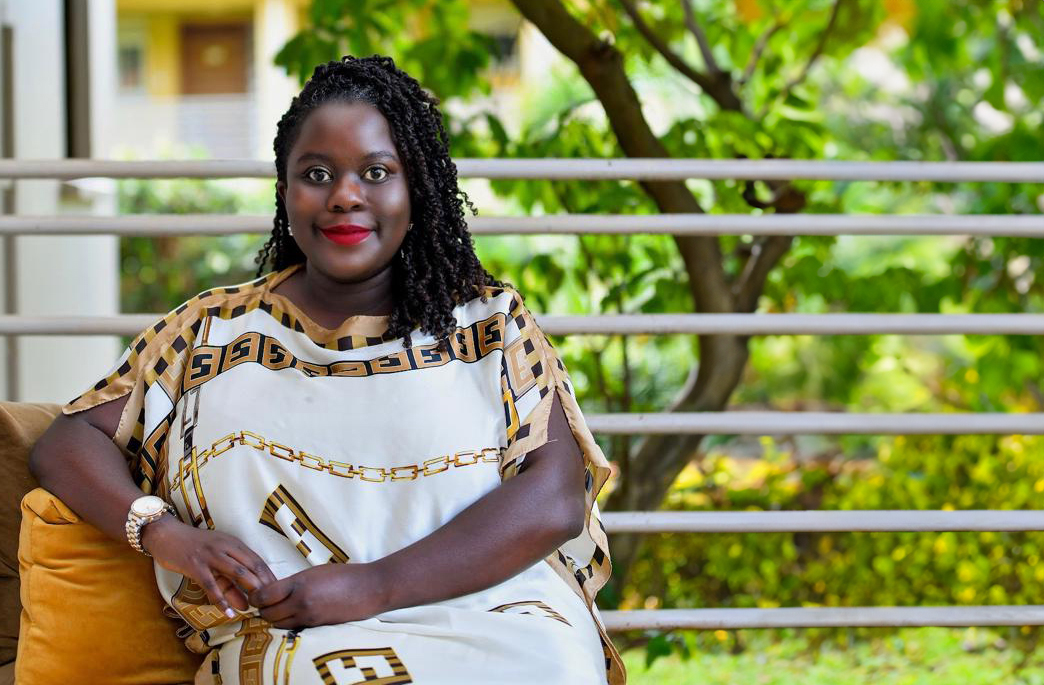
In a global industry where multimillion-dollar transfers and high-stakes disputes unfold far from the floodlights, Pauline Mbanza has carved out a singular position: Uganda's first female international sports lawyer. Here, she talks about ambition, audacity, and why a closed mouth is a closed destiny.
A closed mouth is a closed destiny.
— Pauline Mbanza
Pauline Mbanza remembers the exact moment she knew, she was never meant to walk the beaten path. She had just finished university, and while her peers were still weighing options, she already held the answer. She would practice sports law. Not general practice. Not corporate. Sports law. And within that, football.
“I am grateful I knew what I wanted,” she says now. “From there, it was just about finding the doors, and knocking until they opened.”
Today, she is likely the only woman in Uganda doing what she does. And in a country where a professional women’s football league was launched just two weeks ago, her presence feels less like an anomaly and more like a harbinger. The game is changing. And Mbanza is helping write the new rules.
The Architecture of Ambition
The distance between Kampala and Madrid is not merely geographical. It is measured in currencies of opportunity, expectation, and improbability. But Mbanza has never waited for probability to bend in her favor. She bends it herself.
“From the time I finished university, I knew what I wanted,” she says.
It was a clarity she calls grace. To those around her, it must have seemed improbable because in Uganda, sports law had no well-worn path, no succession of female lawyers whose footsteps she could follow. There was only the wanting, and the willingness to build what did not yet exist.
She studied sports law at the undergraduate level and began a master’s programme before funding cut that journey short. But she had enough knowledge, enough direction, and enough of what can only be described as the shameless and audacious armor.
“When you are doing something that nobody else is doing, especially as a woman, you cannot afford to be timid. You cannot wait for invitations. You have to create them,” she says.
Her practical education began during her master’s, when she landed an internship with Real Madrid FC in their compliance and regulatory department. It was not handed to her. She reached out, followed up, made herself impossible to ignore. “That is where my real work in football started,” she says.
From there, her journey wove through practices across Africa and Europe: Olisa Agbakoba in Nigeria, Sensato Legal in Spain, Sports and Justice in Egypt, and eventually a Portuguese firm she joined after winning a Women in Sports Law award; an opportunity she created by knocking on a partner’s door months before the award existed.
“I really knocked,” she recalls. “She said, ‘We are not hiring.’ But she didn’t forget me. When the award came up, she told me. I wrote my articles. I did my interviews. I won.”
It is this audacity, the willingness to ask, to follow up, to risk rejection that has taken Mbanza to places she had never imagined herself in.
“A closed mouth is a closed destiny,” she says. “If you do not tell people what you do, no one will know. How will I know you are selling cookies if you never show me?”

What She Does
To understand Mbanza’s work is to step into a world where the real game happens off the pitch. She handles contractual disputes, player transfers, and regulatory compliance. She represents clients before the FIFA Dispute Resolution Chamber and the FIFA Football Tribunal. She advises clubs on the labyrinthine regulations that govern international football, and she coaches aspiring agents for the FIFA Football Agent Exam.
One of her most specialized areas is the transfer of minor players, a process FIFA strictly prohibits except under specific exceptions. Navigating those exceptions requires a lawyer, not just an agent. “You cannot smartly navigate that with an agent,” she says. “You need legal guidance.”
She works with clubs, agents, and players, though her practice is international by design. She does not handle purely domestic disputes. “If a Ugandan player has a problem with a Ugandan club, I cannot take that to FIFA,” she explains. “That is what makes my practice truly international. I deal with things that have an international dimension.”
In a globalized football economy where players move across continents and clubs operate under the jurisdiction of world governing bodies, her expertise is essential.
The Loneliest Number
Ask Mbanza how many female sports lawyers she knows in East Africa, and the answer is stark. In Uganda, she might be the only one. In Kenya, she knows two. In Nigeria, with its vast legal landscape, she doubts there are even ten.
Why so few?
She traces the shortage to two intersecting forces; the stereotype of sports as a male domain, and the niche, under-recognised nature of sports law as a profession. “Sports is a physical activity, and people tend to associate physicality with men,” she says. “But sports are not designed for men, it is just that men and women compete separately because of physical differences. Sports are for everyone.”
Then there is the awareness gap. Many women do not even know that sports law exists as a career, or they mistake it for being on the pitch rather than in the boardroom. “They do not realise that it is off-pitch work, involving contracts, regulations, and arbitration,” she says.
Beyond that, she points to professional environments that fail to nurture women. “You can walk into law firms and find that there are no female senior associates or partners,” she observes. “Not because women lack expertise, but because those environments are not encouraging.”
For Mbanza, the solution is visibility. Initiatives like African Women in Sports, a coalition she is part of, are working to change the landscape by showing women that they belong in the sports ecosystem. “When women see other women in the sports ecosystem, they feel inspired to join,” she says.
But inspiration alone is not enough. Protection matters too.
She recalls the tragic case of the Ugandan athlete who was killed in Kenya, a woman who was the stronghold of her home, burned alive. “If women do not come together to stand up against that and create their own shield, more women will not want to take part,” she says quietly. “That is very sad. Because sports is for everybody.”

A Double-Edged Victory
Two weeks ago, the Federation of Uganda Football Associations launched a professional women’s league. It was hailed as a milestone, a sign of progress in a country where women’s football has long been underfunded and overlooked. Mbanza watched the announcement with measured hope.
“I think it could make a difference in the sport itself—but in the legal side, probably not,” she says.
Most Ugandan women interested in football want to compete, and that is wonderful. The league will boost participation, and as WAFCON grows, more nations will develop women’s teams. Countries like Nigeria already have players in top European clubs, Rashidat is at PSG, she notes. If Uganda can start exporting players, it will make a real impact.
But from a legal perspective, she fears the same forces that exploit men’s football will operate with even greater impunity in the women’s game, because the players are newer, less informed, and eager to seize their moment.
“Exploitation is a very real risk,” she says flatly. “Most of them are exploited because they do not know the legal aspects.”
She has seen it in men’s football in Uganda; players who think they don’t need agents or lawyers, who sign whatever is put in front of them, who wait months without pay because no one told them about “no pay, no play.” The same pattern, she predicts, will play out in the women’s league, only worse.
“A player might be promised Shs300,000 and accept it, not realizing that amount cannot sustain them in this economy,” she says. “Women will come into the sport, but at what cost?”
The Rules of the Game
If you sit down with Mbanza and ask her for advice, the kind that could save a career, she will give it to you straight, in bullet points, no sugar coating.
First, get a sports lawyer. Not just any lawyer. A specialist. “A general practitioner might try to figure it out overnight, but it takes time to build real expertise,” she warns.
Second, do your due diligence. Read every document before you sign it. “You may be signing an organ harvest document and have no idea,” she says. She has seen agents sign contracts drafted by AI or by lawyers who left out dispute resolution clauses, preambles, everything that makes a contract enforceable.
Third, do not undermine the services of a sports lawyer. She has had agents balk at a $500 fee for contract drafting, not realizing that $500 can save them from $50,000 in consequences. “Quality work costs money, and it is worth it,” she says.
Fourth, work with an agent, but choose wisely. An agent helps you build a brand, chase image rights, secure endorsements. “You should not only earn from playing,” she says.
Fifth, know your rights. “No pay, no play,” she emphasizes. “If you have not been paid for the first month, start looking for a lawyer before the second month ends. Do not wait.”
Finally, stay out of politics. “That is a quick way to end your career.”

Integrity as Armor
For all her technical expertise, what defines Mbanza is not just what she does but how she does it. She has built her practice on a foundation of principles that she refuses to compromise.
“I do not believe in corruption,” she says simply. She has seen lawyers falsify documents, cut corners, prioritize profit over ethics. “That is not me. I am transparent and honest.”
And above all, she believes in integrity. “A good name is better than riches,” she says. “There are people who want to be rich by any means, those are the people to be afraid of. They have no name to protect.”
That integrity has cost her work. She once refused to represent a club that had mistreated a player, even though they wanted to fight the case. She offered to help them negotiate a fair settlement instead. When they refused, she walked away.
“One case like that could cost me ten others,” she explains. “People will say, ‘She lost that case, why did not she do the right thing?’ I would rather turn down work than compromise my integrity.”
The Next Generation
Mbanza is not content to be the only one. Through her internship scheme, she mentors young women who want to enter sports law, giving them the knowledge, working experience, and encouragement she wished she had when she started. She speaks at conferences, writes, judges moots, and appears on TV and radio, always sharing information, always helping women understand what they deserve.
She would love to speak directly to the teams in the new women’s league. But she knows that path is complicated. “Many clubs thrive on players’ naivety,” she says. “The moment you educate players, clubs lose that advantage.”
So she works strategically, taking on female recruits through her internship, speaking publicly, staying visible. “A closed mouth is a closed destiny,” she says again. And she has no intention of closing hers.
And that, she will tell you, is how destiny is made.