
10 minute read
There is a peculiar sickness that settles into the bones of a person who owes more than they can repay. It is not merely the anxiety of the monthly statement, or the shame of borrowing to buy groceries because your bank account has already surrendered to the month. It is all of these things, yes, but it is also the slow erosion of one’s own sense of agency, the creeping conviction that one’s life is no longer one’s own, that the future has been mortgaged and the present has been reduced to a series of minimum payments and deferred dreams.
Debt is not a mathematical problem. It is a spiritual crisis, a moral reckoning, and a profound assault on human dignity.
—
We do not like to speak of debt in spiritual terms in the twenty-first century. We prefer the language of spreadsheets and credit scores, of interest rates and “financial literacy”. These are clean words, clinical words, words that suggest we are dealing with a manageable problem amenable to rational solutions. But anyone who has lain awake at three in the morning calculating and recalculating their income and wondered how the children will return to school, knows that debt is not a mathematical problem. It is a spiritual crisis, a moral reckoning, and a profound assault on human dignity.
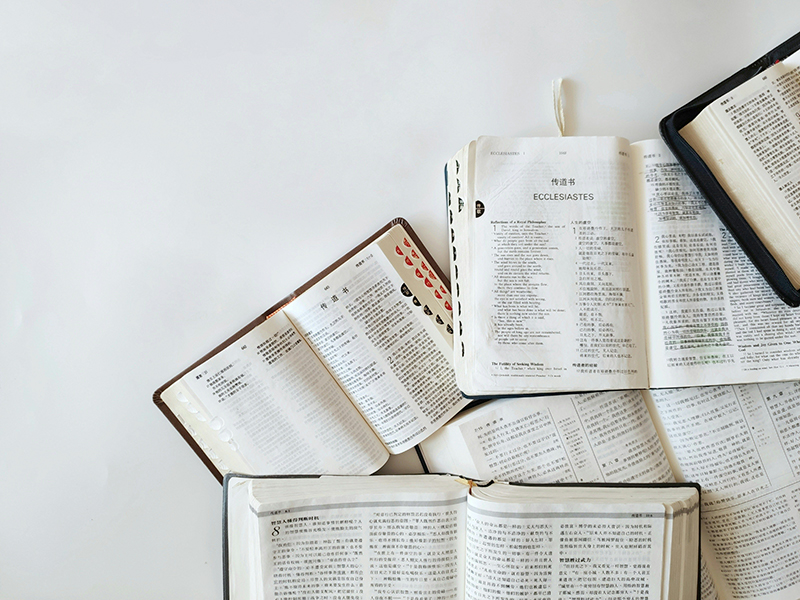
The ancient Hebrews understood this with a clarity we have somehow managed to lose. When the author of Proverbs wrote that “the borrower is servant to the lender,” he was not engaging in rhetorical hyperbole. He was describing a condition of involuntary servitude, a state of being that was fundamentally incompatible with the freedom to which every human being is called. In a culture that understood debt as a form of bondage, indeed, that had institutionalised the cancellation of debts every fifty years precisely because permanent indebtedness was considered an affront to God’s vision for human flourishing, the connection between financial obligation and spiritual captivity was not merely obvious but axiomatic.
The future, meanwhile, has become a hostage to the past, and the present has been reduced to a grinding treadmill of obligation..
—
What the Bible Actually Offers
Consider what it means to be a servant in the modern economy. It means that your labour, your time, your very life force, is being siphoned off to satisfy obligations incurred in moments of desperation or, perhaps more damningly, in moments of ordinary human weakness. That dress you bought for the wedding, the one that made you feel beautiful for a single evening? You are still paying for it, month after month. That vacation you took because your friends convinced you into doing it, the one that now exists only as a fading memory and a growing balance? You are still working for it, still trading your present hours for a past that has already slipped through your fingers. The future, meanwhile, has become a hostage to the past, and the present has been reduced to a grinding treadmill of obligation.

The Bible does not offer us an escape from this predicament, not in the sense of a magic incantation or a get-out-of-jail-free card. What it offers is something far more challenging and, ultimately, far more liberating: a comprehensive reordering of our relationship with money, with possessions, with the very concept of ownership itself. It begins with a radical proposition that our consumer culture has done everything in its power to obscure, that nothing we possess truly belongs to us, that we are merely stewards of resources that ultimately belong to the Divine, and that our financial decisions are therefore matters of profound spiritual consequence.
This is not a comfortable thought for those of us who have built our identities around our possessions, our homes, our carefully curated lifestyles. The psalmist’s declaration that “the earth is the Lord’s, and everything in it” strikes at the very heart of our modern faith in private property and individual autonomy. If I am merely a steward, a caretaker, a temporary custodian of resources that belong to another, then what right do I have to accumulate debt in pursuit of things I do not truly need? What justification can I offer for financing a car that costs more than my annual salary, for renovating a kitchen I cannot afford, for taking a loan to purchase experiences I will not be able to enjoy because I will be too busy working to pay for them?

The question is not merely rhetorical; it demands a level of self-examination that most of us are understandably reluctant to undertake. We have been raised in a culture that equates acquisition with success, that measures worth by net worth, that celebrates the consumption of goods as both a patriotic duty and a path to personal fulfillment. To question this paradigm is to question the very foundations of our identity, to risk being seen as foolish or naive or, worst of all, poor. And yet, it is precisely this questioning that the biblical tradition demands of us.
The Master’s Most Practical Advice
Jesus himself addressed this directly, with a clarity that brooks no evasion. “Suppose one of you wants to build a tower,” he asked, in what might be the most practical financial advice ever offered by a religious figure. “Won’t you first sit down and estimate the cost to see if you have enough money to complete it?” This is not a suggestion; it is a mandate for prudence, a call to think before we act, to count the cost before we commit our resources. In the modern context, this means understanding the true cost of our financial decisions, not merely the monthly payment but the total interest, the opportunity cost, the impact on our ability to save, to give, to live with financial margin.
How many of us have failed to do this? How many of us have signed on the dotted line without fully understanding what we were signing, have accepted financing terms that seemed manageable in the moment but that we now know will take years to repay? The credit industry depends on our lack of calculation, on our willingness to focus on the immediate gratification rather than the long-term consequence. The biblical tradition calls us to a different way of being: to deliberation over impulse, to planning over spontaneity, to wisdom over desire.
This is not to suggest that all debt is immoral or that borrowing is always a sign of spiritual failure. The scriptures acknowledge the reality of debt and even offer guidance for those who find themselves in its grip. The Old Testament law contains elaborate provisions for debt relief, for the protection of borrowers, for the restoration of those who have fallen into financial difficulty. The Jubilee tradition, the periodic cancellation of debts and return of property, stands as a permanent rebuke to the notion that economic inequality is inevitable or divinely ordained.
When Jesus announced his mission by quoting the prophet Isaiah, “He has sent me to proclaim release to the captives and recovery of sight to the blind, to set free those who are oppressed”, he was not merely speaking metaphorically. The captivity from which Jesus came to free us is not merely spiritual; it is also economic, social, and psychological. Debt is a form of captivity, and the gospel offers liberation.
The practical implications of this are profound. If we truly believe that God desires our freedom, then we must be willing to take the steps necessary to achieve it. This means making difficult choices, choices that our consumer culture tells us are unreasonable or even impossible. It means driving the old car for another year, eating at home instead of dining out, saying no to the children when they ask for things we cannot afford. It means living beneath our means, not because we are miserly or joyless, but because we recognise that margin is the prerequisite for generosity and that freedom from debt is the foundation of true stewardship.

Give even when you don’t have…
The shift was subtle but profound. Kawere had been a visionary; Nakyazze became a systems builder. She recognized that vision without infrastructure collapses. And so she built, not a monument to her brother, but a company capable of outlasting her.And yes, it also means giving, even when we feel we have nothing to give. This is perhaps the most counterintuitive element of the biblical formula, the part that our rational minds resist most strenuously. How can we give when we are already in debt? How can we be generous when we can barely pay our own bills? The answer lies in the character of God, in the conviction that generosity is not merely a financial transaction but a spiritual discipline, a way of loosening the grip that money has on our hearts.
When we give, even in small amounts, we are declaring that our security does not lie in our bank accounts, that our worth is not determined by our net worth, that we trust in a provision that transcends our own efforts. This is not magic; it is not a formula for supernatural wealth. It is, rather, a way of reordering our priorities, of reminding ourselves of what truly matters, of breaking the hold that accumulation has on our souls. The early Christians understood this; they shared their possessions, sold their property, distributed to anyone in need. Their generosity was not a symptom of their wealth but a cause of their joy.
I am not suggesting that we return to a primitive communalism, that we abandon the principles of private property and personal responsibility. But I am suggesting that we have lost something essential in our pursuit of individual prosperity, that we have confused financial success with spiritual health, that we have allowed our debt to define us rather than our relationship with God and with one another.
The two steps…
The biblical formula for debt relief is not a technique but a transformation, a complete reorientation of our values and priorities.
It begins with confession; the honest acknowledgment that we have been foolish or prideful or simply careless with our resources.
It continues with repentance; the decision to change our behaviour, to live differently, to do the hard work of paying off what we owe. It requires planning and discipline, sacrifice and patience. And it culminates in freedom, in the experience of being released from the burden that has weighed us down, in the joy of being able to give generously and live fully.
This freedom is not guaranteed; it must be pursued with the same intensity that we pursue our careers, our relationships, our dreams. The apostle Paul wrote to the Romans that “we are all slaves to whatever we choose to obey.” If we choose to obey our creditors, to serve our debt, then we will remain in bondage. But if we choose to obey God, to serve a higher purpose, to live as stewards rather than consumers, then we will discover a liberation that transcends our financial circumstances.
The path is narrow and difficult; let us not pretend otherwise. It requires saying no to things we want and yes to things we need. It requires enduring the judgment of those who do not understand why we are not keeping up with the Joneses.
It requires trusting that God’s provision is sufficient even when our own resources are not. But the promise is clear; the truth will set us free, and the truth about money is that it is a tool, not a master; a resource, not an identity; a servant to be used in the service of love, not a god to be worshipped at the altar of consumption.
The borrowers of our age, the millions of people burdened by lifestyle loans they cannot afford, are not merely victims of a predatory financial system. They are also fellow travellers on a spiritual journey, seeking meaning and security in a world that offers little of either. The biblical formula for getting out of debt does not promise instant wealth or easy solutions. It promises the possibility of a life lived with integrity, with purpose, and with the radical freedom of those who know that their ultimate security lies not in what they possess but in whose they are.
And that, in the end, is the deepest truth that the scriptures have to offer; that we are loved by a God who desires our freedom, that we are called to a life of generosity and gratitude, that our debts, whether financial or spiritual, are not the last word. The last word is mercy, is grace, is the promise of a freedom that no creditor can take away and no bank can repossess. The last word is the great release, the liberation that comes when we finally understand that we were never meant to carry this weight alone.